
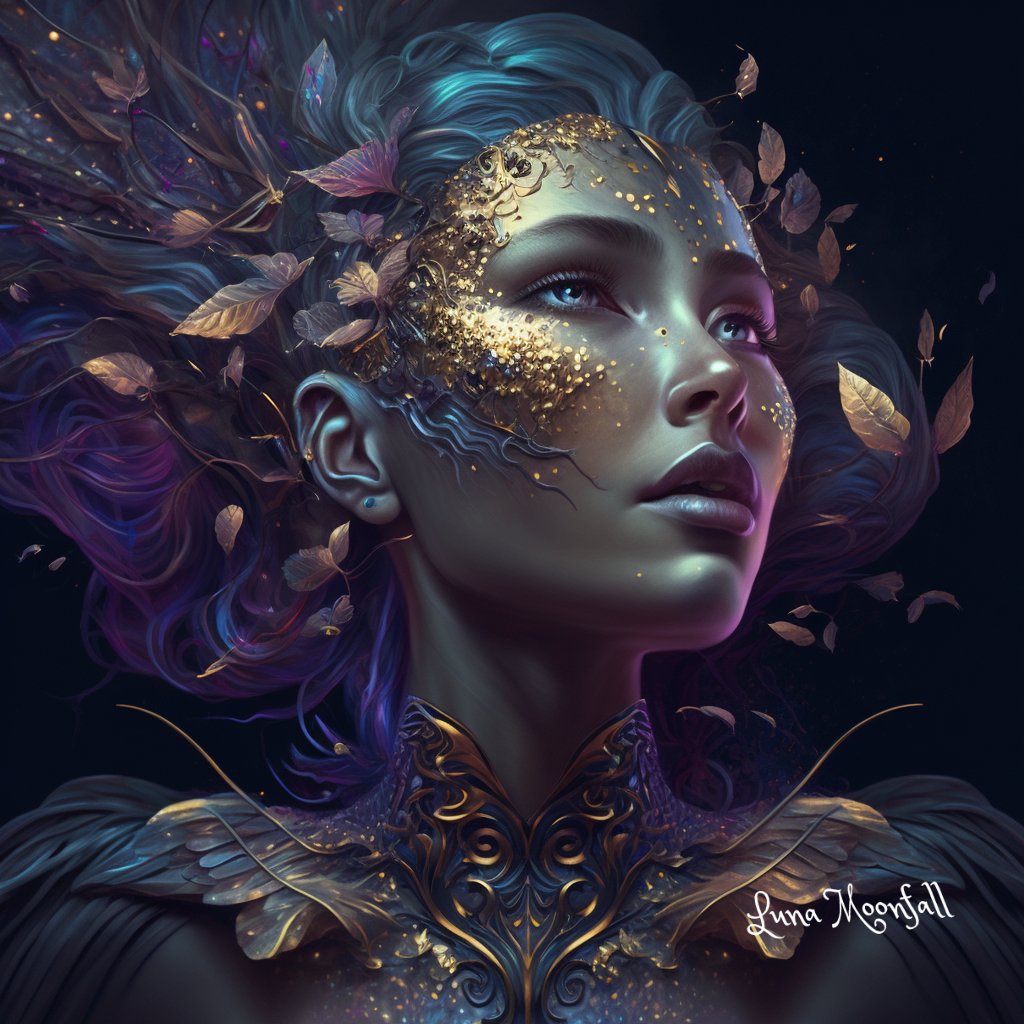
Nyx (pronounced roughly NIX) is the ancient Greek goddess and personification of Night. She belongs to the oldest generation of divine beings in Greek mythology, appearing near the beginning of Hesiod’s Theogony alongside primordial forces such as Chaos, Gaia, Tartarus, and Eros.
Nyx is more than a personification of darkness. Ancient Greek stories connect her with Sleep, Death, Dreams, Fate, and other forces that exist beyond ordinary human control. She is also one of the rare figures whose reputation is formidable enough that even Zeus is described as reluctant to provoke her.
Nowadays, witches often approach Nyx through themes of night, mystery, dreams, shadow work, protection, transformation, and divination. Those practices belong to modern spirituality, however, and shouldn’t be confused with documented religious practices from ancient Greece.
To understand Nyx, it helps to start with the mythology itself.
This post may contain affiliate links. If you choose to make a purchase through these links, I may earn a small commission at no additional cost to you. These commissions help support Moonfall Metaphysical and allow me to continue creating free content, guides, and resources for the community.
I only recommend products, books, and tools that align with the spirit of this content and that I believe may genuinely be interesting, useful, or inspiring to readers.
Who Is Nyx?
Nyx is the Greek goddess and personification of Night. Her name, written as Νύξ in Greek, means “Night.”
In Hesiod’s Theogony, Chaos is the first primordial being to appear. From Chaos come Gaia (Earth), Tartarus (the deep underworld), Eros, Erebus (Darkness), and Nyx (Night). Nyx and Erebus then become parents to Aether, the bright upper air, and Hemera, the personification of Day.
The genealogy becomes even more interesting as the Theogony continues. Nyx is described as the mother of several forces that shape some of the darker and more difficult aspects of existence. Her children include Hypnos (Sleep), Thanatos (Death), the Oneiroi (Dreams), the Moirai (Fates), Nemesis, Eris (Strife), Geras (Old Age), and other personified forces.
This tells us something important about how the ancient Greeks could understand Night. Nyx wasn’t merely the absence of daylight. Night was imagined as a primordial power capable of giving rise to forces that shape the lives of gods and mortals alike.
Her mythology is relatively sparse compared with famous Olympian goddesses such as Athena, Aphrodite, or Artemis. That doesn’t make her a minor figure. In fact, the few surviving passages that feature Nyx give her an unusually formidable reputation.
One of the clearest examples appears in Homer’s Iliad. When the god Hypnos describes fleeing Zeus after angering him, he says that Nyx protected him. Zeus, despite his anger, stopped pursuing Hypnos because he was in awe of Nyx.
Nyx doesn’t require a long list of adventures to establish her place in the mythology. In the ancient stories, Night itself carries considerable weight.
Nyx in Greek Mythology
Nyx occupies an unusual place in Greek mythology because she belongs to the primordial generation of divine beings. She isn’t an Olympian goddess who arrives later with a defined role within Zeus’s kingdom. Nyx is Night itself, existing near the beginning of the Greek cosmic order.
Hesiod’s Theogony gives us the most important account of her genealogy. From Chaos come several primordial beings, including Gaia, Tartarus, Eros, Erebus, and Nyx. From there, Nyx’s family expands into a remarkable collection of personified forces, including Sleep, Death, Dreams, Fate, Strife, and Old Age.
Homer gives us a different glimpse of Nyx’s importance. In the Iliad, Hypnos recalls seeking refuge with his mother after angering Zeus. Zeus ultimately backs down rather than provoke Nyx. The episode is brief, but it gives us a striking picture of the respect surrounding her.
Nyx also appears in traditions beyond Hesiod and Homer. Later Greek writers and Orphic traditions developed different versions of the primordial gods and their relationships, sometimes giving Nyx a more prominent cosmic role.
That variation is typical of Greek mythology. There was no single sacred text that established one official family tree for every god. Different poets and religious traditions could preserve different versions of the same deity’s story.
Nyx and the Beginning of the Cosmos
To understand Nyx’s place in Greek mythology, it helps to look at the creation story presented by Hesiod.
In the Theogony, the universe begins with Chaos. The Greek word khaos doesn’t mean a chaotic mess in the modern sense. It refers to a gap, opening, or primordial expanse.
From Chaos come several primordial beings, including Nyx (Night) and Erebus (Darkness).
Nyx and Erebus are closely connected, but they aren’t simply two names for the same thing. Nyx represents Night, while Erebus is associated with primordial darkness. Together they become the parents of Aether, the bright upper air, and Hemera, the personification of Day.
There is an interesting symmetry in that genealogy:
Night and Darkness give birth to Light and Day.
Nyx then produces a remarkable lineage of her own. In Hesiod’s account, several of her children are personifications of forces that affect mortal existence: Sleep, Death, Dreams, Fate, Strife, Deceit, Misery, Old Age, and others.
This makes Nyx much more than a goddess who governs the hours after sunset. She belongs to the part of Greek cosmology where natural forces, human experiences, and abstract ideas could all take divine form.
Nyx Before the Olympians
Nyx predates the familiar Olympian gods.
Zeus, Hera, Athena, Apollo, Artemis, and the other Olympians belong to a much later generation. Nyx appears before the Titans’ rule and before Zeus becomes king of the gods.
That gives her a different kind of status. She isn’t presented as a goddess who receives her authority from Zeus or governs a particular part of his kingdom. She is part of the older cosmic order itself.
This helps put the story from the Iliad into context. Zeus’s reluctance to provoke Nyx isn’t presented as a straightforward contest of magical strength. Her age and primordial nature are part of what makes her formidable.
The Orphic traditions take Nyx’s cosmic role in another direction. Their creation stories differ from Hesiod’s, and Nyx can occupy a much more prominent place in the succession of primordial powers.
For today’s witches, that primordial position can make Nyx especially compelling. She represents Night before it becomes attached to modern ideas about moon magic, witchcraft, or the occult.
Those later associations can be meaningful, but they belong to contemporary practice rather than surviving instructions from ancient Greek religion.
If you want to explore the wider Greek pantheon alongside Nyx, Greek Mythology: The Gods, Goddesses, and Heroes Handbook is a useful reference.
Nyx’s Children
Nyx’s family tree is unlike almost any other in Greek mythology. In Hesiod’s Theogony, she gives birth to a remarkable collection of personified forces, many of which represent experiences humans cannot escape: sleep, dreams, death, fate, old age, conflict, and suffering.
Her children aren’t simply a collection of “dark” deities. Sleep and Dreams sit alongside Death and Doom, while concepts such as affection, retribution, and fate are also part of her lineage.
Who Are Nyx’s Children?
In Hesiod’s Theogony, Nyx is the mother of:
| Child | Greek Name | Role |
|---|---|---|
| Hypnos | Ὕπνος | God and personification of Sleep |
| Thanatos | Θάνατος | Personification of Death |
| Oneiroi | Ὄνειροι | Personifications of Dreams |
| Moirai | Μοῖραι | The Fates, associated with mortal destiny |
| Nemesis | Νέμεσις | Goddess of retribution |
| Eris | Ἔρις | Goddess and personification of Strife |
| Geras | Γῆρας | Personification of Old Age |
| Oizys | Ὀϊζύς | Personification of misery and distress |
| Momos | Μῶμος | Personification of blame and criticism |
| Philotes | Φιλότης | Personification of affection and friendship |
| Apate | Ἀπάτη | Personification of deceit |
| Moros | Μόρος | Personification of doom or unavoidable fate |
Greek mythology doesn’t have one universal family tree. Different poets and later mythographers sometimes give the same deity different parents, so Hesiod’s genealogy shouldn’t automatically be treated as the only version.
That matters particularly with the Moirai. Hesiod presents them as daughters of Nyx in one part of the Theogony, while giving them a different genealogy elsewhere. Ancient mythology could preserve contradictory traditions without requiring one of them to be “wrong.”
Hypnos and Thanatos
Two of Nyx’s best-known children are Hypnos, the god of Sleep, and Thanatos, the personification of Death.
Their connection is especially striking because Sleep and Death were closely linked in ancient Greek thought. The two appear together in literature and art, and both belong to Nyx’s family.
Hypnos also plays an important role in the story that establishes Nyx’s formidable reputation. After helping Hera put Zeus to sleep, Hypnos fears Zeus’s anger and seeks protection from his mother.
Zeus is furious, but Hypnos escapes because he reaches Nyx’s protection.
The story doesn’t require Nyx to threaten Zeus or demonstrate some extraordinary weapon. Her presence is enough to make Zeus reconsider pursuing her son.
The Oneiroi: Dreams
The Oneiroi are the personifications of Dreams and are another important part of Nyx’s mythology.
Dreams occupied a complicated place in ancient Greek culture. They could be interpreted as omens, divine communications, or experiences requiring careful interpretation.
For modern practitioners, Nyx’s connection with the Oneiroi makes dream journaling and dreamwork an obvious contemporary association.
The surviving mythology gives us the connection between Nyx and Dreams; the devotional practices built around that connection belong to the present.
The Moirai: The Fates
Nyx is also connected with the Moirai, better known as the Fates.
The Fates are associated with the portion or destiny allotted to each mortal life. Their parentage varies among ancient traditions, but Hesiod includes them among Nyx’s children.
This adds another dimension to Nyx’s mythology. Night isn’t limited to sleep and dreams. Her family also reaches into questions of destiny, mortality, and the limits of human control.
Those themes can make Nyx an interesting figure for modern reflection or divination, particularly when you’re thinking about choices and circumstances that aren’t entirely within your control.
Nyx’s Darker Children
Several of Nyx’s other children personify difficult aspects of existence.
Eris represents Strife. Apate represents Deceit. Oizys embodies Misery and Distress. Geras represents Old Age, while Moros represents Doom or an unavoidable fate.
Taken together, they give us a much broader picture of Nyx than the modern image of a goddess surrounded by stars and black candles.
Her mythology encompasses sleep and dreams, mortality and aging, fate and consequence, conflict and desire.
Night isn’t only peaceful.
It can be when the mind wanders, dreams appear, fears surface, and the things we avoid during the day become harder to ignore.
That’s part of what makes Nyx such an interesting primordial figure.
Why Even Zeus Feared Nyx
One of the most memorable stories involving Nyx comes from Homer’s Iliad. It gives us a glimpse of her authority without giving her a long list of heroic adventures.
The story involves Hypnos, the god of Sleep, and begins with Hera asking him to help her put Zeus to sleep.
Hypnos had helped Hera before, but Zeus was not someone he wanted to anger. After carrying out Hera’s request, he fled when Zeus realized what had happened and sought protection from his mother, Nyx.
According to Hypnos, Zeus had been ready to throw him into the sea after discovering what he had done. Hypnos escaped because he reached Nyx’s protection.
And Zeus stopped pursuing him.
The reason is striking: Zeus did not want to provoke Nyx.
That doesn’t mean the ancient Greeks believed Nyx was literally stronger than Zeus in every respect. The passage isn’t a straightforward ranking of which deity would win a fight. Instead, it emphasizes her ancient and formidable status.
Nyx belongs to a generation of primordial powers that predates Zeus and the Olympian order. Her age and position in the cosmic genealogy give her a different kind of authority from the gods who rule Olympus.
Nyx’s Power in the Iliad
The story is particularly interesting because Nyx barely has to do anything.
She doesn’t threaten Zeus or challenge him directly. She doesn’t need a weapon or a dramatic display of power.
Hypnos simply reaches her, and Zeus backs down.
That makes the passage an important counterpoint to modern depictions that turn Nyx into a generic “dark goddess.” In Homer, she is an ancient cosmic force whose protection carries enough weight to make the king of the gods reconsider his actions.
The story also reinforces the connection between Nyx and Sleep, since Hypnos is her son. More broadly, it fits the mythology surrounding Night and the experiences associated with it.
Was Nyx More Powerful Than Zeus?
Not necessarily.
Ancient Greek mythology doesn’t have a consistent power-ranking system. A deity’s authority can look very different depending on the poet, story, or religious tradition.
What the Iliad actually gives us is more specific: Zeus does not want to anger Nyx.
That’s enough to make her one of the more formidable figures in Greek mythology without turning the story into a contest between two gods.
Nyx was ancient. She was primordial. And even Zeus respected the consequences of crossing her.
What Does the Name Nyx Mean?
The name Nyx comes from the ancient Greek Νύξ (Nýx) and means “Night.” The name is direct because Nyx is the personification of Night itself.
In Greek mythology, personifications could give a divine identity to something fundamental to the world or human experience. Nyx isn’t a goddess who merely governs nighttime; she embodies Night as a primordial force.
Nyx, Night and Darkness
It’s easy to use “night” and “darkness” interchangeably when talking about Nyx, but Greek mythology gives them distinct identities.
Nyx is Night.
Erebus is associated with primordial Darkness.
In Hesiod’s genealogy, Nyx and Erebus are paired as primordial beings and become the parents of Aether, the bright upper air, and Hemera, the personification of Day.
Modern witchcraft often uses darkness as a broader symbol for the unconscious mind, shadow work, mystery, death, transformation, and the unseen. Those ideas can work beautifully in a contemporary Nyx practice, but they go beyond the literal meaning of her name.
The ancient Greek meaning is wonderfully straightforward:
Nyx means Night.
How Do You Pronounce Nyx?
Nyx is usually pronounced approximately “NIX,” rhyming with mix.
The Greek spelling is Νύξ. Ancient Greek pronunciation differed from modern English, but “NIX” is the conventional English pronunciation used when discussing the goddess.
Nyx and Nox
If you’ve encountered the name Nox while researching Nyx, you’re looking at the Roman personification of Night.
Greek and Roman writers often adapted related mythological figures into their own traditions, and Nox became a figure in Roman poetry and literature.
For a Greek mythology article, though, Nyx is the name to focus on.
Nyx Goddess Symbols & Associations
Nyx doesn’t have one standardized set of sacred symbols comparable to Athena’s owl or Poseidon’s trident. The surviving sources tell us much less about her iconography, so some symbols associated with Nyx today come from ancient imagery while others developed through modern witchcraft.
The distinction is useful, especially when researching a deity whose modern aesthetic has become much more elaborate than the surviving mythology.
Night and Darkness
The clearest symbol of Nyx is Night itself.
She represents the arrival of darkness and the period when the sun has disappeared from the sky. This is her fundamental association and the one that needs no modern interpretation.
Darkness can carry additional meanings in contemporary witchcraft, including mystery, rest, the unknown, hidden things, and the parts of ourselves that aren’t always visible. Those meanings can be incorporated into a modern practice with Nyx, but they aren’t a standardized ancient list of her attributes.
Stars and the Night Sky
The stars are a natural representation of Nyx and the world she embodies.
Later artistic depictions of Nyx sometimes emphasize the celestial nature of Night, including star-covered imagery. Ancient Greek sources also place Nyx within a broader cosmology of Night, Day, darkness, and the heavenly realm.
For a modern altar, stars can represent the vastness of the night sky, navigation, dreams, and the mysteries beyond what we can see.
Veils and Dark Cloaks
Nyx is often depicted in modern artwork as a dark, star-covered figure wearing a veil or flowing cloak.
The imagery works well visually, but it shouldn’t be mistaken for a standardized ancient Greek religious symbol. A dark cloth, veil, or shawl can still make an effective modern altar piece if you want something that represents Night without using a literal statue of the goddess.
Wings
Wings appear in some ancient and later artistic representations of Nyx.
The imagery emphasizes movement through the heavens and the otherworldly nature of a primordial deity. Winged depictions aren’t a universal attribute of Nyx, so they’re best understood as an artistic association rather than a required symbol.
Sleep and Dreams
Nyx’s family gives her a strong connection with sleep and dreams.
Her son Hypnos represents Sleep, while the Oneiroi represent Dreams. Nyx isn’t the Greek goddess of dreams in the same specific sense that the Oneiroi embody dreams, but both belong to her mythology.
For contemporary witchcraft, that connection makes dream journals, nighttime meditation, and dreamwork fitting additions to a Nyx altar or devotional practice.
Death and Mortality
Nyx is also connected with Death through her son Thanatos.
That doesn’t make Nyx the Greek goddess of Death. Thanatos occupies that particular role.
Death is nevertheless part of Nyx’s mythological family, which is why themes of mortality, endings, and transformation sometimes appear in modern devotional work with her.
Fate
The Moirai, or Fates, provide another connection.
Hesiod includes the Fates among Nyx’s children, although their parentage varies across ancient traditions. Because the Moirai are associated with mortal destiny, they add themes of fate, inevitability, and the limits of human control to Nyx’s mythology.
Divination and reflection on life paths are natural modern extensions of those themes.
Crows, Owls and Other Night Animals
You’ll frequently find owls, crows, ravens, bats, moths, and black cats listed as symbols of Nyx online.
These work well as contemporary witchcraft associations because they’re nocturnal or strongly connected with darkness and nighttime imagery.
There isn’t, however, a surviving ancient source establishing the black cat or raven as Nyx’s specific sacred animal in the way the owl is associated with Athena.
For a modern altar, a moth, owl, bat, crow, raven, or black cat can still represent Night, mystery, or the unseen. Choose the animal because it has meaning for your own practice, not because an internet correspondence chart says Nyx requires it.
The Moon
The moon is probably the most common modern symbol associated with Nyx, but this is where a little historical clarity helps.
Nyx is not the Greek goddess of the Moon. That role belongs primarily to Selene, the divine personification of the Moon.
The Moon naturally belongs to the visual landscape of Night, so the modern association makes sense. Contemporary witches may incorporate lunar imagery into Nyx devotion, particularly during nighttime or lunar rituals.
Historically, though:
Nyx = Night. Selene = Moon.
Nyx Symbols at a Glance
For a modern Nyx altar or grimoire, these are some of the most useful associations:
- Night and darkness — Nyx’s primary domain
- Stars — the night sky and its vastness
- Dark cloths and veils — modern representations of Night
- Wings — found in artistic depictions
- Sleep and dreams — through Hypnos and the Oneiroi
- Death and mortality — through Thanatos
- Fate — through the Moirai in Hesiod’s genealogy
- Moon imagery — a modern association rather than Nyx’s primary domain
- Owls, moths, bats, crows, ravens and black cats — contemporary symbolic associations rather than firmly established sacred animals
You don’t have to use every one of these on an altar. A dark cloth, candle, stars, dream journal, or image of the night sky can be enough to represent Nyx.
Is Nyx a Goddess or a God?
Nyx is a goddess and the personification of Night in Greek mythology.
Her name is feminine in ancient Greek, and the surviving sources portray Nyx as a female divine figure. In Hesiod’s Theogony, she is the mother of numerous divine beings, including Hypnos, Thanatos, and the Oneiroi.
Why Do People Search for “Nyx God”?
The search term “Nyx god” appears frequently because people encounter the name without knowing whether Nyx is male or female. Some sources also use “god” as a general term for a deity, which can add to the confusion.
If you’re searching for Nyx god, the answer is:
Nyx is a Greek goddess, not a Greek god.
She is specifically the divine personification of Night.
Is Nyx a Goddess of Darkness?
Nyx is often described as a goddess of darkness, but Night is the more precise description.
Her name means Night, and she represents the darkness associated with nighttime. The primordial deity Erebus, meanwhile, is associated with primordial Darkness.
Modern witchcraft often gives “darkness” a broader symbolic meaning, connecting it with the unconscious mind, shadow work, mystery, transformation, death, and the unseen. Those ideas can be part of a contemporary Nyx practice, but they go beyond her literal ancient domain.
Is Nyx a Primordial Goddess?
Yes.
Nyx belongs to the primordial generation of Greek deities, appearing near the beginning of the mythological genealogy, before the Titans and Olympians in Hesiod’s account.
The primordial gods aren’t simply an earlier version of the Olympians. They represent fundamental elements and forces involved in the formation of the cosmos.
Nyx represents Night.
Her ancient status also helps explain the respect she receives in Homer’s Iliad, where Zeus is reluctant to provoke her after Hypnos seeks her protection.
Was Nyx Worshipped?
Nyx appears prominently in ancient Greek mythology and cosmological poetry, but evidence for a widespread, organized cult devoted specifically to her is limited compared with major Olympian deities.
There are ancient references connecting Nyx with religious and oracular traditions, but we don’t have enough surviving evidence to reconstruct a detailed, standardized system of Nyx worship.
That distinction is useful when approaching her today. We have mythology, genealogy, and literary references to work from, but not an ancient instruction manual for building a Nyx altar or conducting a specific devotional ritual.
Modern practitioners therefore have to interpret the surviving material when creating a practice of their own.
Nyx and Hecate
Nyx and Hecate are frequently connected in modern witchcraft. Both goddesses are associated today with night, mystery, magic, thresholds, and the unseen, so it’s easy to assume they have always occupied the same place in Greek mythology.
The ancient sources give us a more complicated picture.
Is Hecate the Daughter of Nyx?
In Hesiod’s genealogy, no.
Hesiod’s Theogony, one of our earliest surviving sources for Hecate’s family, identifies her as the daughter of the Titan Perses and Asteria. Asteria is herself the daughter of the Titans Coeus and Phoebe.
So in Hesiod’s version, Hecate is not Nyx’s daughter.
Other ancient traditions give Hecate different parentage. One surviving tradition identifies Nyx as her mother, while other sources connect her with Zeus and Asteria or with Demeter.
For that reason, the safest historical statement is:
Hecate is most famously described as the daughter of Perses and Asteria, although some ancient traditions identify Nyx as her mother.
Greek mythology allows these conflicting genealogies to coexist. Different poets and traditions preserved different versions of the gods’ origins.
Why Are Nyx and Hecate Connected?
The overlap becomes easier to understand when we look at their associations.
Nyx represents Night, while Hecate developed connections with magic, crossroads, boundaries, the night, and the supernatural. Her later traditions also increasingly connect her with ghosts and the underworld.
There is plenty of thematic overlap, even though the two goddesses aren’t interchangeable.
Modern witchcraft has expanded that connection further. Someone might work with Nyx and Hecate together for nighttime rituals, divination, protection, shadow work, or periods of transition.
That doesn’t require treating them as the same deity.
Nyx, Hecate and the Night
Nyx and Hecate are also not simply two names for a single Greek goddess of Night.
Nyx is the primordial personification of Night.
Hecate’s role developed differently. In Hesiod, she is a powerful goddess with a share in the earth, sea, and sky and an honored position among gods and mortals. Her associations with magic, crossroads, ghosts, and the underworld become more prominent in later traditions.
That gives each goddess her own identity even where their symbolism overlaps.
Nyx and Hecate in Modern Witchcraft
If you work with both Nyx and Hecate today, you can give each one a distinct place in your practice.
Nyx can represent Night, primordial power, dreams, darkness, and the vastness of the cosmos.
Hecate can represent magic, thresholds, crossroads, liminal spaces, and transitions.
There will naturally be some overlap. That’s fine. Modern devotional practice doesn’t require every deity to occupy a completely separate symbolic category.
The useful thing is knowing which ideas come from the ancient mythology and which ones you’ve developed through your own practice.
Nyx and the Moon
Nyx and the Moon are closely connected in modern witchcraft, but Nyx is not the Greek goddess of the Moon.
In ancient Greek mythology, Selene is the goddess and personification of the Moon. Hesiod describes Selene as the daughter of the Titans Hyperion and Theia, alongside her siblings Helios, the personification of the Sun, and Eos, the personification of Dawn.
Nyx represents Night itself.
The distinction can get blurred because the Moon is one of the most visible features of the nighttime sky. Modern artwork and witchcraft naturally bring the two together, but they remain separate divine figures in Greek mythology.
Nyx and Selene
The relationship between Night and the Moon is more interesting than assigning them competing territories.
Selene is the Moon. Nyx is the Night in which the Moon appears.
The two can therefore work as complementary figures in a modern practice without treating them as the same goddess.
A practitioner might honor Nyx during a lunar ritual, for example, because the ritual takes place at night. That doesn’t change Selene’s mythological role as the Moon’s personification.
Does Nyx Control the Moon?
There is no standard ancient Greek tradition in which Nyx controls or drives the Moon.
That role belongs to Selene, who is described as traveling through the heavens and illuminating the earth with her light.
Lunar imagery can still have a place on a Nyx altar. A crescent moon might represent the night sky, cycles, darkness and illumination, dreams, or the passage of time.
Those meanings come from contemporary symbolism, not an ancient Greek doctrine about Nyx.
Why the Moon Still Works on a Nyx Altar
If you’re creating a modern Nyx altar, lunar imagery can make perfect visual sense.
A crescent moon might represent:
- the nighttime sky
- changing cycles
- darkness and illumination
- dreams and intuition
- the passage of time
- the boundary between what is seen and what remains hidden
If historical accuracy is your priority, stars and the night sky are stronger direct representations of Nyx than a crescent moon alone.
If you’re comfortable with modern symbolism, lunar imagery can still be a beautiful addition.
If you want to work with both Nyx and Selene, there’s no reason they can’t have separate places in your practice. One represents the Night, while the other represents the Moon that moves through it.
How Do You Know If Nyx Is Calling You?
This is one of the questions that comes up often when people begin researching Nyx. You may find yourself repeatedly thinking about her, dreaming about the night sky, feeling unusually drawn to darkness, or encountering her name in several unrelated places.
Does that mean Nyx is calling you?
Maybe. But there isn’t a historical checklist that can tell you for certain.
Ancient Greek sources don’t give us a system of signs that Nyx sends to modern people. Lists online that claim seeing a particular animal, number, crystal, moon phase, or repeated symbol proves that Nyx has contacted you are modern spiritual interpretations.
That doesn’t make your experience meaningless. It means you get to decide what significance it has in your own practice.
Common Signs People Associate With Nyx
Today, people who work with Nyx often describe experiences such as:
- Feeling unusually comfortable or connected to nighttime
- Becoming fascinated with Nyx’s mythology after encountering her name
- Having vivid or memorable dreams
- Feeling drawn to stars, the night sky, or darkness
- Repeatedly encountering imagery associated with Nyx
- Becoming interested in primordial deities or Greek cosmology
- Feeling drawn toward dreamwork, divination, or nighttime meditation
- Experiencing a sense of peace or familiarity when spending time outside after dark
You’ll also find much longer lists online involving specific animals, numbers, colors, moon phases, or supposedly guaranteed omens. Those can be meaningful within an individual’s practice, but there isn’t an ancient source establishing them as Nyx’s personal system of communication.
What If You Keep Seeing Nyx’s Name?
If the name Nyx keeps appearing in your life, researching her is a good place to start.
You don’t have to immediately assume that a goddess has contacted you.
Read her mythology. Look at the ancient sources. Learn about her children and her place among the primordial gods. Pay attention to what draws you in and what doesn’t.
You may discover that you’re genuinely interested in Nyx as a figure from Greek mythology. You may decide that her symbolism fits your spiritual practice. Or you may eventually decide that she isn’t a deity you want to work with.
All three are perfectly valid outcomes.
Dreams and Nyx
Dreams deserve special attention because they have a genuine connection to Nyx’s mythology.
Hypnos, the personification of Sleep, is one of her children, and the Oneiroi represent Dreams. Ancient Greek culture also placed considerable importance on dreams and their interpretation.
If you’re having unusually vivid dreams while researching Nyx, keeping a dream journal can help you observe what is actually happening instead of assigning a supernatural explanation to every dream.
Write down the dream when you wake up. Record recurring imagery, emotions, names, places, and anything that stands out.
Over time, patterns may become easier to recognize.
If you believe a particular dream was a spiritual experience, you can hold that interpretation while remaining curious about other possibilities.
A guided dream journal can be especially useful if you’re beginning to pay closer attention to recurring dreams and patterns.
You Don’t Need a Sign to Work With Nyx
One common misconception surrounding deity work is that you need to receive a dramatic supernatural sign before you’re “allowed” to approach a deity.
You don’t.
If Nyx’s mythology interests you, you can learn about her. If you want to honor her, you can begin a small devotional practice. You don’t have to wait for a raven at your window at midnight or for her name to appear three times in one day.
A genuine interest in a deity is enough reason to learn more.
If you do believe you’re experiencing signs from Nyx, take your time with them. Look for patterns instead of isolated coincidences, research the mythology behind the symbols you’re encountering, and let your understanding develop gradually.
There is something fitting about approaching the goddess of Night with a little patience.
How to Work With Nyx
Working with Nyx today means building a devotional practice around the themes found in her mythology: Night, primordial darkness, dreams, sleep, fate, mortality, and the unknown.
There isn’t a single prescribed way to approach her. You can start with something as simple as spending time outside after sunset and learning more about the mythology behind the goddess.
Spend Time With the Night
The most direct way to connect with Nyx is also the simplest: spend some time outside after dark.
Sit somewhere safe where you can see the sky. Watch the stars. Notice how the landscape changes after sunset. Pay attention to sounds, temperature, clouds, and the movement of the Moon.
You don’t have to turn the experience into a formal ritual.
Night itself is the starting point.
If going outside at night isn’t practical, sitting beside a window with the lights turned down can create a similar atmosphere.
If you want to take your Nyx practice further, The Path of Nyx: Rituals, Oracles and Meditations is specifically focused on devotional work with the primordial goddess of Night.
Keep a Dream Journal
Dreamwork has a natural place in a modern Nyx practice because Hypnos and the Oneiroi are part of her mythology.
Keep a notebook beside your bed and write down your dreams as soon as you wake up. Even a few sentences can be useful.
You might dedicate the journal to Nyx or begin your nighttime routine with a simple intention such as:
Nyx, goddess of Night, may I be attentive to what the night reveals.
There’s no need to treat every dream as a message from a deity. The journal can simply help you notice recurring imagery, emotions, and patterns.
Practice Nighttime Meditation
Nyx can also provide a focus for meditation.
Turn off unnecessary lights, sit somewhere comfortable, and spend several minutes paying attention to your breathing and the darkness around you.
You might focus on the feeling of being surrounded by night rather than trying to visualize a particular goddess.
For someone who finds daytime practice distracting or overstimulating, nighttime meditation can create a completely different atmosphere.
Use Divination Thoughtfully
Modern practitioners sometimes associate Nyx with divination, dreams, intuition, and hidden knowledge.
Tarot, oracle cards, pendulums, scrying, or other forms of divination can be incorporated into a contemporary Nyx practice.
One simple approach is to draw a single tarot card at the beginning of a nighttime meditation and journal about what it brings to mind.
You don’t have to interpret the card as a direct message from Nyx.
It can simply be a tool for reflection.
Honor the Darker Parts of Life
Nyx’s mythology isn’t limited to peaceful nighttime imagery.
Her children include Death, Sleep, Dreams, Old Age, Strife, Deceit, Misery, Doom, and the Fates. That gives her mythology a much broader emotional range than the modern aesthetic of stars, moons, and black candles might suggest.
A modern practice with Nyx can include reflection on:
- mortality
- endings
- uncertainty
- grief
- change
- things outside your control
- rest and surrender
- parts of yourself you tend to avoid
This doesn’t mean every difficult experience needs to become a spiritual lesson. Sometimes acknowledging that something is difficult is enough.
Start Small
If you’re new to deity work, start with something manageable.
Spend ten minutes with the night once a week. Keep a dream journal. Light a candle while you reflect on the day. Learn one ancient source about Nyx before adding another correspondence to your altar.
Over time, you’ll get a better sense of which parts of the practice actually matter to you.
Nyx’s mythology doesn’t require elaborate rituals or a complicated devotional routine.
Sometimes, working with the goddess of Night can be as simple as turning off the lights, looking up at the sky, and paying attention.
Nyx Altar Ideas
A Nyx altar can be as elaborate or as simple as you want. Since there isn’t a surviving ancient Greek blueprint for a dedicated Nyx altar, there’s plenty of room to create a space based on her mythology and the way Night feels to you.
The strongest starting point is Night itself.
Colors for a Nyx Altar
Modern Nyx altars commonly use dark, nighttime colors such as:
- Black — darkness, mystery, and the unknown
- Deep blue — the nighttime sky
- Indigo or violet — dreams and the unseen
- Silver or white — stars against darkness
These are contemporary correspondences, so think of them as a starting point rather than rules.
A black or deep-blue altar cloth can create a simple backdrop without needing much decoration.
Candles
A candle represents the small amount of light that exists within darkness.
For a Nyx altar, you might choose a black, deep-blue, white, or unscented candle. A celestial or star-shaped candle can also work if it suits your altar.
If you use candles, keep fire safety in mind and never leave a burning candle unattended.
Stars and Night-Sky Imagery
Stars are one of the most natural visual choices for a Nyx altar.
You could use:
- a star map
- celestial artwork
- small star decorations
- constellation imagery
- a photograph of the night sky
A small mirror can also reflect candlelight and create the impression of stars against darkness.
Moon Imagery
A crescent moon is another popular choice, although the historical distinction from the previous section still applies.
The Moon belongs to Selene in Greek mythology, not Nyx.
Using lunar imagery on a Nyx altar is therefore a contemporary association with her connection to Night. If historical accuracy is your priority, emphasize stars and the night sky instead of making the Moon the centerpiece.
If you’re comfortable with modern symbolism, lunar imagery can still be a beautiful addition.
Nocturnal Animals
You may also want to include an animal associated with nighttime.
Common choices include an owl, moth, bat, crow, raven, or black cat.
These aren’t established as a universal set of sacred animals belonging to Nyx. Their usefulness comes from what they represent to you: nighttime, mystery, solitude, observation, movement through darkness, or the unseen.
Choose one because you like the symbolism, not because you feel obligated to include it.
Crystals
Crystals are another contemporary addition to Nyx altars.
Some commonly used choices include:
- Black obsidian — reflection and introspection
- Black tourmaline — protection and grounding
- Amethyst — dreams and meditation
- Labradorite — mystery and the unseen
- Moonstone — lunar symbolism
These aren’t ancient Greek offerings or sacred stones documented specifically for Nyx. They’re modern metaphysical correspondences.
If you enjoy scrying, an obsidian scrying mirror can also become a practical addition to a nighttime altar.
A Nyx Statue or Artwork
If you want a central representation of Nyx, look for artwork that emphasizes her identity as Night.
A starry sky, winged figure, dark veil, or celestial scene can all work.
You don’t need a literal statue of a woman representing Nyx. A piece of artwork showing the night sky can be just as effective.
A Dream Journal
A dream journal is one of the most useful additions to a Nyx altar because it connects with her mythology through Hypnos and the Oneiroi.
Keep it somewhere you can easily reach at night or first thing in the morning.
You can use it for dreams, nighttime observations, Tarot readings, or reflections from your devotional practice.
What to Put on a Nyx Altar
If you want to keep things simple, start with five things:
A dark cloth + a candle + stars + an offering bowl + a journal.
That’s enough.
Add crystals, artwork, animal imagery, Tarot cards, or other objects as your practice develops.
The goal is to create a space that makes you think of Night when you sit down in front of it.
Nyx Offerings
If you’re looking for offerings for Nyx, the historical evidence is much thinner than it is for some of the better-documented Greek gods and goddesses.
We don’t have a surviving ancient Greek text that gives us a definitive list of offerings to Nyx. For a contemporary devotional practice, offerings can instead be chosen from the themes associated with her mythology: Night, dreams, darkness, the stars, and the forces connected with her children.
What Can You Offer Nyx?
Some simple offerings include:
- Fresh water
- Wine or another beverage
- Honey
- Bread or baked goods
- Fruit
- Flowers
- Incense
- A candle
- A written prayer or poem
- Time spent beneath the night sky
Food and drink offerings can be placed on an altar for a short period and then disposed of respectfully. Avoid leaving food outdoors, where it can attract wildlife or create problems for local ecosystems.
Offerings Inspired by the Night
An offering doesn’t have to be something you consume.
For Nyx, you could spend an evening beneath the stars, turn off your phone, and give yourself fifteen minutes of quiet observation.
You could also dedicate a dream journal entry, write a poem about the night, create artwork, or spend time reading about Nyx’s mythology.
These acts are especially fitting if you prefer devotional offerings that don’t involve food or physical objects.
Candles and Incense
A candle is an easy addition to a Nyx altar.
A black, deep-blue, white, or unscented candle can represent the contrast between darkness and light. Incense can also help create a ritual atmosphere.
There isn’t a documented ancient Greek candle color or incense blend specifically assigned to Nyx, so choose something based on your own symbolism and preferences.
As always, use candles and incense safely, keep the area ventilated, and never leave a flame unattended.
Flowers and Plants
Flowers can also be offered to Nyx, particularly when their nighttime characteristics are part of the symbolism.
Night-blooming flowers make a fitting contemporary choice. Moonflower, evening primrose, jasmine, and night-blooming jasmine are examples of plants associated with nighttime blooming or fragrance.
These aren’t documented ancient offerings to Nyx. Their connection comes from the relationship between the plants and Night itself.
Can You Offer Nyx Crystals?
Crystals can be included on a Nyx altar, although there aren’t crystals documented as specific ancient offerings to her.
If you already work with crystals, you might choose something that represents an aspect of Nyx’s symbolism—for example, obsidian for darkness and reflection, amethyst for dreams, or labradorite for mystery and the unseen.
The meaning you give the object is part of your practice.
Does Nyx Like Blood Offerings?
You’ll sometimes encounter claims online that certain deities require blood, animal sacrifice, or other extreme offerings.
There is no basis for telling modern practitioners that Nyx requires blood offerings.
Ancient Greek religion did include animal sacrifice in certain contexts, but sacrificial practices varied between gods, places, and occasions. We don’t have evidence establishing a requirement for blood offerings to Nyx today.
A glass of water, a candle, a prayer, or your time can all serve as a simple devotional offering.
The Best Offering to Nyx
If you’re unsure what to offer, start with something uncomplicated.
Pour a glass of water. Light a candle. Say a short prayer. Spend some time looking at the stars.
Nyx, ancient goddess of Night, I offer this moment of my attention and gratitude.
It doesn’t have to be elaborate.
A thoughtful offering is more meaningful than buying a collection of objects because an internet list told you a goddess “requires” them.
Nyx Crystals, Herbs & Correspondences
Modern witchcraft has developed a wide range of crystals, herbs, colors, and other correspondences associated with Nyx. Some fit naturally with her mythology, while others are contemporary additions based on symbolism.
Because ancient Greek sources don’t provide a standardized correspondence chart for Nyx, it’s helpful to separate mythological associations from modern witchcraft correspondences.
Nyx Crystal Correspondences
Some crystals commonly associated with Nyx include:
| Crystal | Modern Association |
|---|---|
| Black Obsidian | Darkness, introspection, protection, scrying |
| Labradorite | Mystery, intuition, the unseen |
| Amethyst | Dreams, meditation, spiritual reflection |
| Black Tourmaline | Grounding and protection |
| Moonstone | Night, lunar cycles, intuition |
Black obsidian is particularly useful if you want to incorporate scrying into your Nyx practice. An obsidian scrying mirror can serve as both a devotional object and a practical divination tool.
These aren’t ancient Greek sacred stones belonging specifically to Nyx. They’re modern metaphysical correspondences chosen because their symbolism complements her mythology.
Nyx Herb and Plant Correspondences
Plant associations with Nyx are even less firmly established in the ancient sources.
For a contemporary practice, you might choose plants connected with nighttime, dreams, or the sensory experience of evening.
Jasmine — Night-blooming jasmine and other jasmine varieties are strongly associated with nighttime fragrance.
Lavender — Commonly used today in sleep and relaxation practices, making it a natural modern association with Nyx’s connection to Hypnos.
Mugwort — Frequently used in contemporary witchcraft for dreams, divination, and liminal work.
Night-blooming flowers — Moonflower and evening primrose can represent Night through their blooming cycles.
These associations are modern. There isn’t an ancient Greek source saying that Nyx’s sacred herb was jasmine, mugwort, or lavender.
Nyx Colors
For a Nyx altar, ritual, journal, or spellwork, the following colors work particularly well:
- Black — Night, darkness, mystery
- Deep blue — The nighttime sky
- Indigo — Dreams and the unseen
- Violet — Mystery and spiritual reflection
- White or silver — Stars and light within darkness
Black and deep blue are the most direct choices if you want the color scheme to reflect Nyx herself.
Nyx Animals
There are many animals associated with Nyx in modern correspondence lists, including:
- Owls
- Moths
- Bats
- Crows
- Ravens
- Black cats
Their connection is primarily symbolic. These animals are nocturnal, active at dusk, associated with darkness, or culturally connected with mystery and the unseen.
There isn’t a surviving ancient Greek source establishing all of these animals as sacred to Nyx.
That distinction is especially important with ravens and black cats, which are frequently presented online as if they were historically documented symbols of Nyx.
Nyx Tarot and Divination Correspondences
Nyx’s mythology lends itself naturally to themes of divination and reflection.
The High Priestess can be a particularly fitting Tarot association because of its themes of mystery, hidden knowledge, intuition, and what exists beneath the surface.
The Moon can also work well because of its connection with dreams, uncertainty, illusion, and the subconscious.
The Death card can represent another side of Nyx’s mythology through her son Thanatos and the broader themes of mortality and transformation.
These are interpretive correspondences, not ancient Greek assignments.
Nyx Correspondences at a Glance
If you want a quick reference for your grimoire, you could use:
- Deity: Nyx
- Domain: Night
- Elemental association: Darkness / Night
- Colors: Black, deep blue, indigo, violet, white, silver
- Crystals: Obsidian, labradorite, amethyst, black tourmaline, moonstone
- Plants: Jasmine, lavender, mugwort, moonflower, evening primrose
- Animals: Owl, moth, bat, crow, raven, black cat
- Symbols: Stars, night sky, darkness, wings, veil
- Tarot: High Priestess, Moon, Death
- Themes: Dreams, sleep, fate, mortality, mystery, the unseen
This is a modern correspondence system, not an ancient Greek religious chart.
Use the associations that actually resonate with your practice and leave the rest behind.
Nyx Tarot & Divination
Nyx’s mythology lends itself naturally to divination. Night has long been associated with dreams, mystery, hidden things, and experiences that aren’t always easy to explain in daylight.
There is also a direct mythological connection through Nyx’s children. Hypnos represents Sleep, while the Oneiroi represent Dreams. The Moirai, meanwhile, are associated with fate in Hesiod’s genealogy.
That gives modern practitioners plenty of material to work with, even though we don’t have evidence of a standardized ancient Greek “Nyx tarot” or divination system.
If you prefer oracle cards to Tarot, Oracle of the Divine is a particularly fitting option for a mythology-focused practice, with cards inspired by deities and legendary figures from around the world.
Tarot Cards Associated With Nyx
Several Tarot cards can work particularly well when you’re creating a modern Nyx correspondence system.
The High Priestess
The High Priestess is probably the most obvious match.
Her imagery centers on mystery, intuition, hidden knowledge, silence, and what exists beneath the surface. Those themes fit naturally with a modern devotional practice focused on Nyx.
The Moon
The Moon brings in dreams, uncertainty, illusion, intuition, and the subconscious.
Despite its name, the card doesn’t mean that Nyx is the Greek Moon goddess. The association comes from the card’s symbolism and its connection with nighttime and the unknown.
Death
Death can represent mortality, endings, transformation, and the inevitability of change.
That makes it particularly interesting in relation to Nyx’s son Thanatos, the personification of Death.
Again, this is a modern interpretive association rather than an ancient Greek correspondence.
The Wheel of Fortune
The Wheel of Fortune can represent cycles, changing circumstances, and forces outside individual control. Those ideas can connect with the Moirai and the broader themes of fate found within Nyx’s family.
A Simple Nyx Tarot Spread
You can create a simple three-card reading around the themes of Night:
- What am I not seeing?
- What is emerging from the darkness?
- What should I carry forward?
Draw the cards at night and record your interpretation in your journal.
You could also use a single-card pull before bed and ask:
What deserves my attention tonight?
The purpose isn’t to force every card into a message from Nyx. Let the reading be a tool for reflection and see what patterns develop over time.
Nyx and Scrying
Scrying is another natural fit for a modern Nyx practice because it involves working with darkness, reflection, and what appears within a darkened surface.
A black obsidian scrying mirror can be used in a dimly lit room while focusing on the surface without trying to force an image to appear.
Begin with a few minutes of quiet breathing. Let your eyes relax and observe the surface. If shapes, impressions, memories, or thoughts arise, record them afterward rather than immediately deciding what they mean.
Scrying doesn’t have to be treated as proof of supernatural communication. It can also function as a meditative or introspective practice.
A black obsidian scrying mirror can be used in a dimly lit room while focusing on the surface without trying to force an image to appear.
Nyx and Samhain
Nyx and Samhain are frequently connected in modern witchcraft, particularly by practitioners who work with darkness, ancestors, death, spirits, and the transition into winter.
There is, however, an important historical distinction:
Nyx belongs to ancient Greek mythology. Samhain comes from the traditional Gaelic festival calendar.
There is no evidence that ancient Greeks celebrated Samhain or that historical Samhain traditions included devotion to Nyx.
Why Does Nyx Fit So Well With Samhain?
The connection makes sense symbolically.
Samhain marks the beginning of winter in the traditional Gaelic seasonal calendar and has long been associated with the boundary between one part of the year and another. Modern Samhain practice often incorporates themes of ancestors, death, remembrance, divination, and the thinning of boundaries between worlds.
Nyx’s mythology includes several of those same themes through her children and her identity as Night.
Her son Thanatos represents Death. Her children include the Oneiroi, associated with Dreams, and the Moirai, associated with fate in Hesiod’s genealogy.
That gives modern witches plenty of symbolic material to work with during Samhain.
Nyx as a Modern Samhain Deity
If you already work with Nyx, you might choose to include her in your Samhain practice as a deity representing:
- the darkness of the season
- mortality and the passage of time
- dreams and divination
- the unknown
- reflection and endings
- the quiet transition into winter
This is a modern devotional connection, not an ancient Greek-Samhain tradition.
You don’t have to claim that Nyx was historically honored at Samhain to create a meaningful practice with her today.
Nyx Samhain Altar Ideas
A Nyx-inspired Samhain altar could combine imagery from both traditions while keeping their origins clear.
Try a dark altar cloth with candles, autumn leaves, seasonal fruit, stars, a small bowl for offerings, and a journal for dreams or divination.
You could also include photographs or written names of ancestors if ancestor work is already part of your Samhain practice.
A black candle can represent the darkness of the season, while a white or silver candle can represent the stars or light within the darkness.
There is no need to make the altar look historically Greek. You’re creating a modern spiritual practice that brings together two different symbolic traditions.
Nyx and Samhain Divination
Divination is particularly easy to incorporate into a Nyx-inspired Samhain practice.
At night, light a candle and draw one Tarot or oracle card with a question such as:
What am I ready to leave behind?
or:
What deserves my attention as I enter the darker half of the year?
Write the card and your first interpretation in your journal. Revisit it later in the season and see whether your perspective has changed.
The value is in the reflection, not in claiming that every card is a supernatural message.
A Modern Connection, Not an Ancient One
It’s tempting to blend mythologies together when their symbolism overlaps, especially when working with seasonal traditions.
There’s nothing wrong with creating those connections in modern witchcraft. The important part is being honest about where they come from.
Nyx wasn’t a Samhain goddess in ancient Greece.
She can, however, be a meaningful modern deity to work with during Samhain if her mythology and symbolism resonate with you.
A Modern Nyx Ritual
This is a simple modern ritual inspired by Nyx’s mythology and her connection with Night, dreams, darkness, and reflection. It isn’t a reconstruction of an ancient Greek ceremony.
You can perform it outside beneath the stars or indoors beside a window after sunset.
What You’ll Need
- A black, deep-blue, white, or silver candle
- A fire-safe candle holder
- A small offering bowl
- A glass of water or another simple offering
- Your journal and a pen
- Optional: an obsidian, amethyst, or other personally meaningful crystal
1. Prepare Your Space
Turn off unnecessary lights and give yourself a few quiet minutes before beginning.
Place the candle in front of you along with your offering and journal. If you’re outside, choose a safe location where you can sit comfortably without disturbing wildlife or leaving anything behind.
2. Light the Candle
Light the candle and take a few slow breaths.
Look at the flame for a moment, then allow your attention to move toward the darkness around it.
You can say:
Nyx, ancient goddess of Night,
I welcome the quiet of darkness.
May I be willing to see what I usually overlook,
to rest when I need rest,
and to listen when the world grows quiet.
3. Make Your Offering
Place your offering beside the candle.
It can be as simple as a glass of water. You might also offer a small amount of food, incense, flowers, or something you’ve created yourself.
Say a few words of gratitude if you’d like. They don’t need to be formal.
4. Sit With the Night
Spend five to fifteen minutes sitting quietly.
If you’re outside, look at the stars. If you’re indoors, watch the candle flame and notice the darkness surrounding it.
Let your thoughts come and go without trying to force a particular experience.
You can reflect on questions such as:
- What have I been avoiding?
- What needs rest?
- What am I ready to release?
- What remains unclear in my life?
- What do I want to understand better?
You don’t have to find an answer during the ritual.
5. Journal
When you’re ready, write down whatever came to mind.
Record any emotions, memories, ideas, dreams, or questions that surfaced. If nothing particular happened, write that down too.
Keeping a record over several rituals can reveal patterns that aren’t obvious from a single experience.
6. Close the Ritual
Thank Nyx in whatever words feel appropriate to you.
You might say:
Nyx, goddess of Night,
thank you for the quiet and the darkness.
May I carry what I have learned with me
as I return to the light.
Extinguish the candle safely and leave the space tidy.
If you’ve left a food or drink offering on your altar, dispose of it respectfully rather than leaving it outdoors.
A Simple Nyx Ritual for Beginners
You can make the entire practice even shorter.
Light a candle after sunset. Pour a glass of water. Sit quietly for five minutes. Look at the night sky if you can. Then write one page in your journal.
That’s enough to begin.
You don’t need elaborate tools, expensive crystals, or a complicated ritual structure to develop a meaningful relationship with a deity.
Nyx FAQs
What is Nyx the goddess of?
Nyx is the Greek goddess and personification of Night. She is a primordial deity who appears near the beginning of Hesiod’s cosmic genealogy. Her mythology connects her with Night, darkness, sleep, dreams, death, fate, and other primordial forces through her children.
Is Nyx a goddess or a god?
Nyx is a goddess. She is the female personification of Night in ancient Greek mythology. If you’ve searched for “Nyx god,” you’re likely looking for information about the Greek goddess Nyx.
What does the name Nyx mean?
Nyx means “Night” in ancient Greek. The name is written Νύξ in Greek.
Who are Nyx’s children?
In Hesiod’s Theogony, Nyx is the mother of several personified forces, including Hypnos, Thanatos, the Oneiroi, the Moirai, Nemesis, Eris, Geras, Oizys, Momos, Apate, Philotes, and Moros. Other ancient traditions give some deities different genealogies.
Why did Zeus fear Nyx?
In Homer’s Iliad, Zeus is reluctant to provoke Nyx after her son Hypnos seeks her protection. Hypnos had helped Hera put Zeus to sleep and feared Zeus’s anger. The story establishes Nyx as an ancient and formidable primordial power, but it doesn’t necessarily mean she was universally “more powerful” than Zeus.
Is Nyx the goddess of darkness?
Nyx is most precisely the goddess and personification of Night. Darkness is naturally part of her imagery, while the primordial deity Erebus is associated with Darkness. Modern witchcraft often gives Nyx additional associations with shadow work, mystery, and the unseen.
Is Nyx the Moon goddess?
No. Selene is the Greek goddess and personification of the Moon. Nyx represents Night. The Moon is naturally associated with Nyx in modern witchcraft because it appears in the nighttime sky, but the two are separate figures in Greek mythology.
Is Nyx the mother of Hecate?
It depends on the ancient source. Hesiod’s Theogony identifies Perses and Asteria as Hecate’s parents, while some other ancient traditions give her different parentage, including Nyx as her mother. There isn’t one universally consistent genealogy across Greek mythology.
Was Nyx worshipped in ancient Greece?
Nyx appears in ancient Greek mythology and religious literature, but evidence for a widespread organized cult dedicated specifically to her is limited. Ancient sources do preserve references connecting Night with religious and oracular traditions, so it would be inaccurate to say that Nyx was completely absent from ancient religious practice.
What are Nyx’s symbols?
Nyx’s strongest symbolic association is Night. Stars, the night sky, darkness, wings, and veils can also represent her. Modern practitioners commonly add nocturnal animals, crystals, candles, and lunar imagery, although many of these are contemporary associations rather than documented ancient symbols.
What offerings can you give Nyx?
Modern practitioners may offer Nyx water, wine, honey, food, flowers, incense, candles, written prayers, or time spent beneath the night sky. There isn’t a surviving ancient source that provides a definitive list of offerings specifically required by Nyx.
How do you know if Nyx is calling you?
There isn’t an ancient Greek checklist of signs that confirms Nyx is contacting someone. Feeling drawn to her mythology, dreams, nighttime, stars, or themes of darkness can be meaningful within a personal spiritual practice, but individual experiences should be interpreted thoughtfully rather than treated as automatic proof of divine communication.
Can you work with Nyx during Samhain?
Yes, as a modern devotional practice. Nyx and Samhain come from different traditions: Nyx belongs to ancient Greek mythology, while Samhain comes from the traditional Gaelic festival calendar. Their themes overlap around darkness, mortality, dreams, divination, and seasonal transition, which can make Nyx a meaningful modern addition to Samhain practice.
How do you pronounce Nyx?
Nyx is commonly pronounced “NIX,” rhyming with “mix.”
Closing Thoughts on Nyx
Nyx is one of those Greek deities whose importance becomes clearer the further back you look.
She isn’t an Olympian with a long list of heroic adventures. She is something much older: the personification of Night, appearing near the beginning of the Greek cosmic genealogy.
Her children connect her mythology with Sleep, Dreams, Death, Fate, Strife, Old Age, and other forces that shape human existence. The story of Hypnos also gives us one of the most memorable glimpses of her authority, when even Zeus is unwilling to provoke her.
Modern witchcraft has developed its own ways of working with Nyx through nighttime meditation, dreamwork, divination, altar work, offerings, and reflection. Those practices aren’t ancient Greek rituals, and they don’t need to pretend to be.
What makes Nyx compelling is the mythology itself.
Night can be peaceful, mysterious, frightening, beautiful, restful, and completely indifferent to what happens beneath it. Nyx encompasses all of that.
If you feel drawn to her, start with the mythology. Learn where the ancient stories end and modern practice begins. Then decide what kind of relationship, if any, you want to build with the goddess of Night.
Sometimes the best place to begin is simply stepping outside after dark and looking up.